
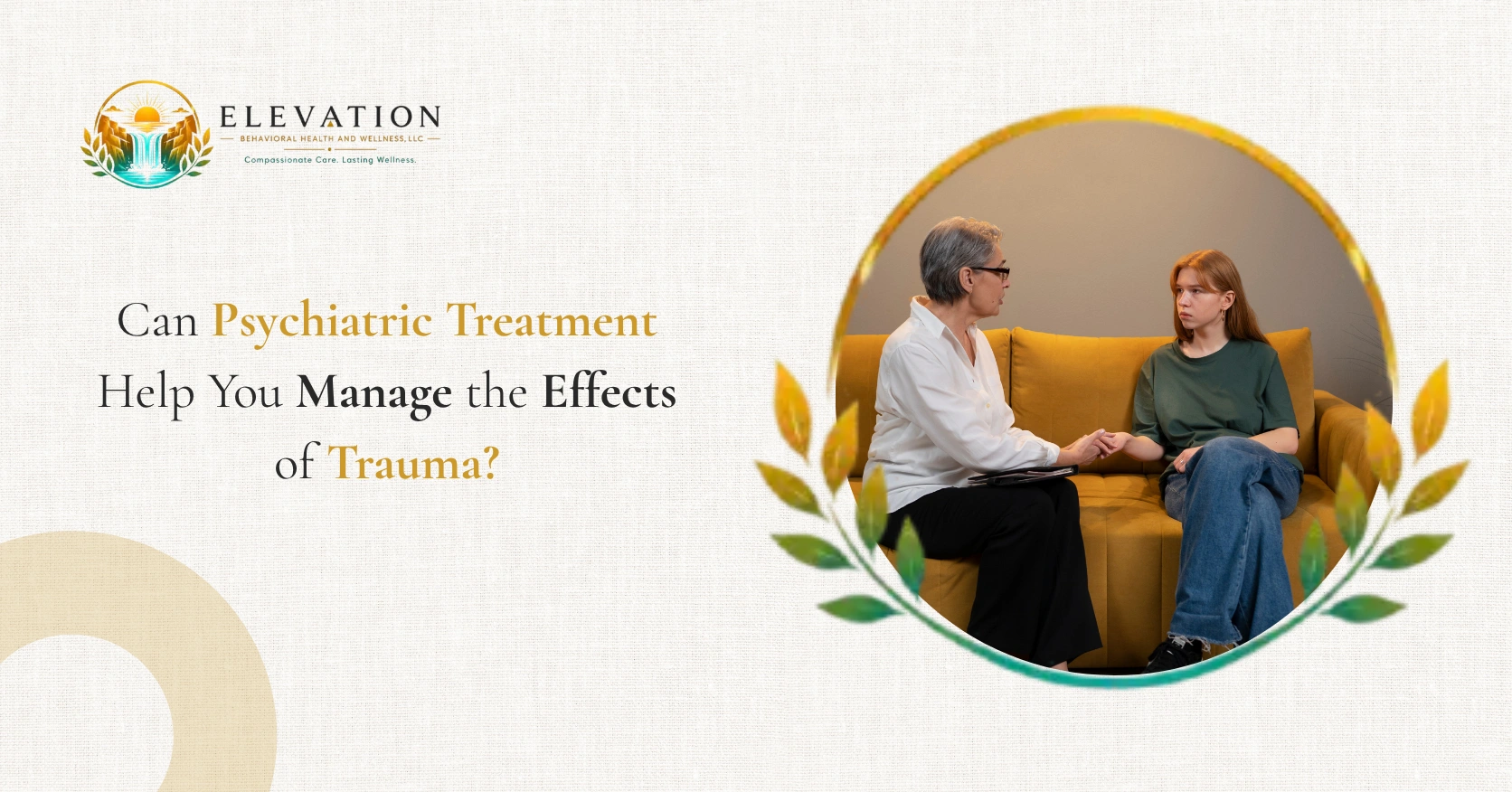
Going through a scary event changes how you feel every day. This is called trauma. Sometimes, these feelings stay. You may be sad, fearful, or anxious. Your sleep may be disturbed and you may avoid situations that trigger memories of the incident. Many people go through this exact struggle.
some, recovery is possible with the passage of time and support. Others may continue to struggle long after the event has ended.
Elevation Behavioral Health and Wellness offers personalized psychiatric care for adolescents and adults. We prioritize individual needs to create a treatment plan that enhances emotional well-being.
So, can psychiatric treatment help you manage the effects of trauma? Let’s look at this.
How Trauma Can Affect Mental Health
Trauma can come from many experiences. These can be abuse, violence, an injury, loss, lack of care, natural disaster, or other situations that make them feel unsafe.
The mind and body are hypervigilant following a difficult incident. Someone may think that they are in danger, though they are not. Common trauma responses are:
- Feeling scared or worried
- Trouble sleeping
- Bad dreams
- Feeling angry
- Feeling sad
- Trouble focusing
- Avoiding people or places
- Feeling numb or empty
- Feeling tense or jumpy
All of these signs can complicate work, school, family and friend relationships.
Talking with a mental health provider may be helpful if these problems persist over a prolonged period of time.
Can Psychiatric Treatment Help You Manage the Effects of Trauma?
Yes. Psychiatric treatment can help people manage trauma-related symptoms and enhance daily functioning. It doesn’t eliminate past events but enables a person to address trauma’s impacts in healthier, safer ways.
A psychiatric professional first seeks to comprehend the individual’s symptoms, background, worries and objectives. This evaluation informs the treatment strategy.
At Elevation Behavioral Health and Wellness, thorough psychiatric assessments are conducted to grasp symptoms and create tailored care plans.
Treatment may involve therapy, medication management, or a mixture of both, tailored to the individual’s requirements.
How Therapy Can Help After Trauma
Therapy gives people a safe place to talk. It can help them understand their feelings and learn new ways to cope.
A therapist may help a person:
- Understand their trauma
- Notice what makes them feel upset
- Learn ways to calm down
- Handle fear and worry
- Build trust
- Feel safer
- Improve relationships
- Work through painful memories
Therapy should move at a safe pace. A person should not feel forced to talk about things before they are ready.
Elevation Behavioral Health and Wellness provides therapy and counseling opportunities to help develop coping tools and promote wellness.
How Medication May Support Trauma Recovery
Some people have strong symptoms after trauma. These may include anxiety, depression, or trouble sleeping.
Medicine may help lower these symptoms. It may make it easier to focus, sleep and take part in daily life.
A psychiatric provider can check if medicine may help. If medicine is used, the provider will check how it is working.
This may include
- Checking symptoms
- Watching for side effects
- Changing the dose when needed
- Finding a better medicine if needed
Medicine is not right for everyone. The best choice depends on the person’s needs.
At Elevation Behavioral Health and Wellness, we provide medicine care and regular checks to help support safe treatment.
Why Personalized Trauma Treatment Matters
Every person is different. Two people may go through the same event but feel very different after it.
One person may have trouble sleeping. Another may feel sad or angry. Someone else may avoid people or places.
That is why personalized care matters.
A treatment plan should consider the person’s symptoms, mental health history, current needs and personal goals. It should also be reviewed as those needs change.
At Elevation Behavioral Health and Wellness, we use a patient-centered approach designed around each person’s unique mental health and wellness needs.
When Should You Seek Psychiatric Help?
Consider psychiatric care if trauma symptoms disrupt daily life. Reach out if you:
- Feel anxious or fearful often
- Experience repeated nightmares
- Avoid certain places or people
- Have sleep issues
- Feel very sad or numb
- Struggle with anger
- Find it hard to concentrate
- Feel unsafe without real danger
- Notice symptoms affecting work or relationships
Don’t wait for severe symptoms; early support can help you understand and manage your experiences.
How Online Psychiatric Care Can Help
Some people find it hard to leave home after trauma. Others may feel nervous about going to a new place.
Online psychiatric care can make it easier to get help. With telepsychiatry, a person can meet with a provider through a secure online visit.
This may help people who need care from home.
At Elevation Behavioral Health and Wellness, we offer telepsychiatry services for teens and adults. Our goal is to make mental health care easier to reach.
Take the First Step
Living with trauma can feel hard; you might feel like no one understands. But help is available.
Psychiatric treatment can help people manage symptoms and build a better daily life. Therapy, medicine and support may all be part of care.
At Elevation Behavioral Health and Wellness, we provide personalized mental health care for teens and adults. We offer psychiatric visits, medication care, therapy and online care.
If trauma is affecting your life, reaching out for help can be a good first step.
FAQs
What if I have tried psychiatric treatment before and it did not work?
Sometimes it takes a few tries to find the right provider or the right treatment. Do not lose hope. A fresh start with a new provider can make all the difference.
Do I have to take medicine if I go to treatment?
No, medicine is only an option. Your provider will work with you to decide if medicine is a good choice for your healing.